
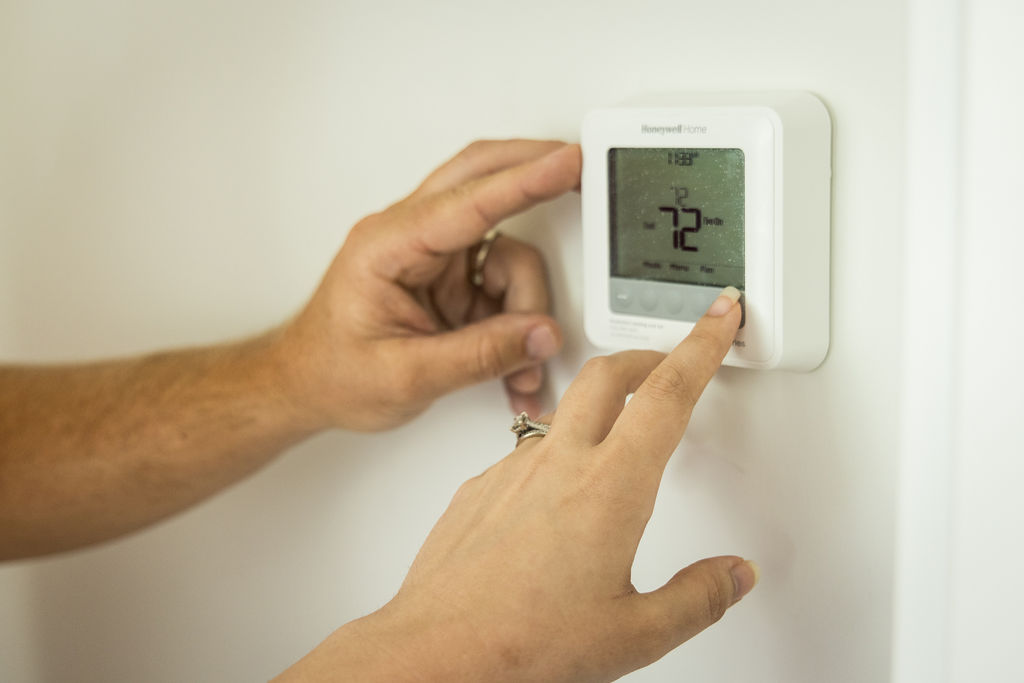
Louisville's unpredictable weather does more than just test a wardrobe—it challenges an HVAC system and energy bills. Adjusting heat on those unexpectedly cold days in late spring and early summer, and getting cool on those random hot days in fall, can be inconvenient and costly.
A smart HVAC system can resolve this by automatically adjusting according to relevant data like your schedule, weather changes, and preferences.
Developments in A.I. are making these systems even smarter, getting better at interpreting data to optimize energy use and performing predictive maintenance to identify when you may need to get service done.
App integrations lets you control the system from your phone, whether you're at work downtown or on vacation.
A "smart" HVAC system uses connected technology and artificial intelligence (A.I.) to optimize a home's comfort and energy use.
Smart thermostats are one example of this, integrating with existing A.I. systems.
However, newer smart systems integrate with zoning controls, air-quality monitors, and a smart-home ecosystem.
A.I. can learn patterns within the home, such as whether you prefer the bedroom cooler at night. Real-time weather data helps adjust heating cycles in advance.
The result is an HVAC system becoming a responsive partner rather than a set-it-and-forget-it appliance.
Louisville experiences all four seasons show up—sometimes in the same week. Yet traditional HVAC systems treat every day the same. Even on an unusually cool morning, programmable thermostats may switch from heating to cooling at 7 AM simply because that's what was set months ago.
A.I.-powered HVAC, on the other hand, auto-adjusts throughout the day. Delaying cooling until the house actually needs it, then ramping up gradually rather than running full blast, can be great for both comfort and cost efficiency.
On humid summer nights, smart thermostats can optimize for humidity removal rather than just temperature to make a home more comfortable without overcooling.
This adaptability is valuable during Louisville's shoulder seasons when you need heat in the morning and cooling by afternoon.
Traditional systems treat the entire home as one space, heating or cooling everything equally. Smart zoning divides homes into separate areas with individual thermostats and motorized dampers in the ductwork.
Companion apps let users set different temperatures for different zones.
Keep bedrooms cooler at night while living areas stay warm.
Cool the home office during work hours without wasting energy on an empty bedroom.
For Louisville's historic homes—many with multiple floors with differing sun exposure—zoning solves the annoying issue of too-hot and too-cold spots.
A.I. learns what zones are used and when so that over time the system optimizes automatically, pre-conditioning spaces before use them and conserving energy in unused zones.
Ever returned from a vacation to a house that's too cold or too hot?
Mobile app control lets users manage the HVAC system from anywhere with internet access.
Many smart-HVAC apps break down energy use and associated costs by day, week, or month. These apps can alert users to issues like filter changes, unusual energy spikes, or potential system problems before these have the chance to become expensive repairs.
Smart HVAC systems can integrate with A.I. voice assistants like Alexa, Google Assistant, and Siri.
For those with mobility issues or just busy hands while cooking dinner or carrying groceries, voice control can be a great convenience.
These systems work with other smart-home devices such as smart blinds that automatically close during hot afternoons to reduce cooling loads.
Smart HVAC systems typically reduce energy bills and lead to better savings over time. According to EPA estimates, a smart thermostat can pay back in under two years.
For Louisville homeowners, summer cooling and winter heating can demand significant energy because of the temperature highs and lows of these seasons.
The savings come from multiple sources:
Smart HVAC makes sense for most Louisville homes because of the variable climate.
However, this upgrade could be especially valuable if you:


