
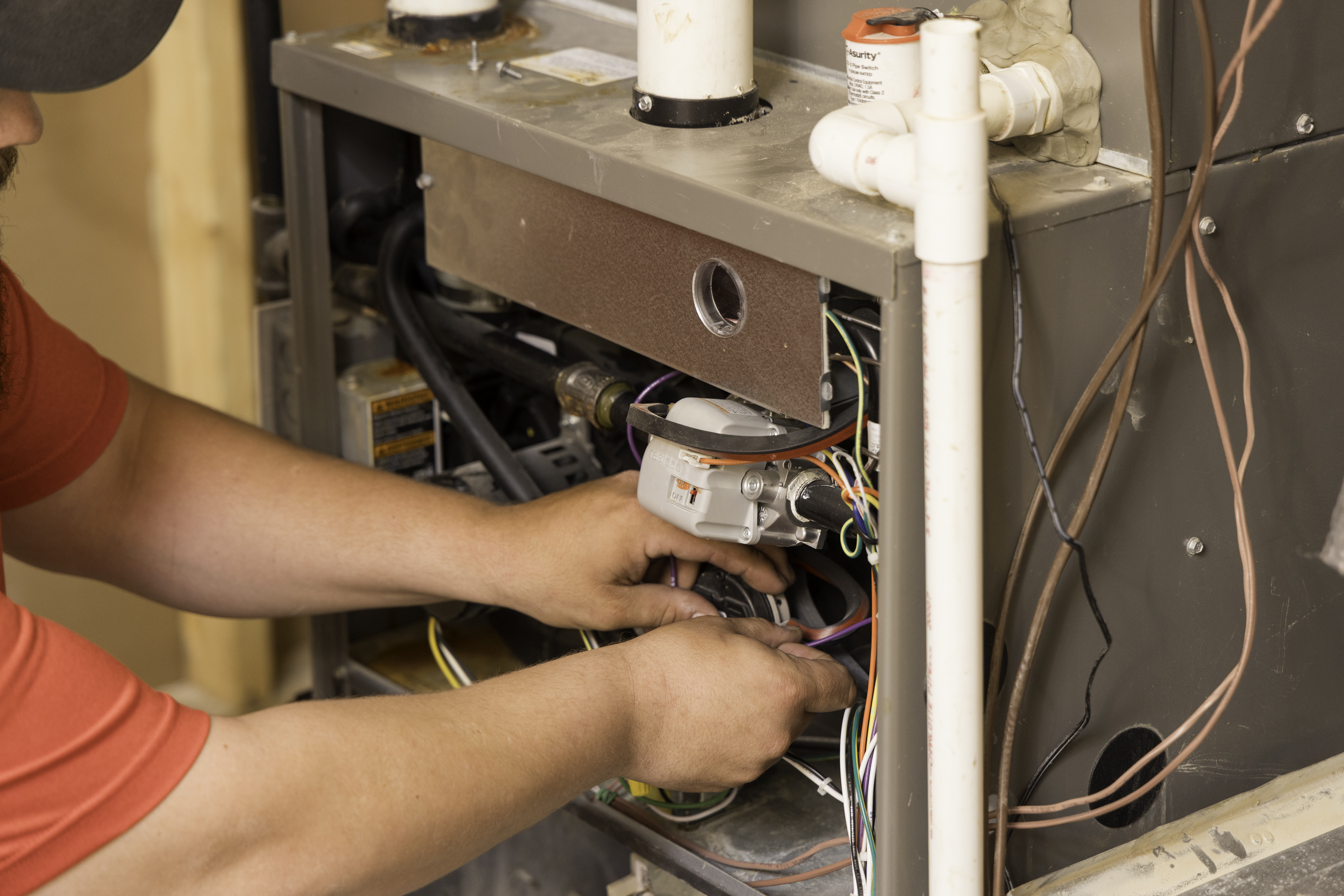
It's a sweltering July afternoon in Louisville. You walk inside expecting cool relief, but your vents are pushing warm air and your thermostat already reads 80°F. Before you panic or pick up the phone, take a breath. Many of the most common reasons an AC blows warm air are things you can check yourself in under 15 minutes.
At Prudential, we've served Louisville homeowners through decades of Ohio Valley summers. It’s the kind of heat and humidity that pushes HVAC systems to their limits. We've seen it all, and we know that a fast, informed homeowner can often solve the problem on their own, or at least give a technician the information needed to fix it faster when professional HVAC repair is required.
Many of the most common reasons an AC blows warm air are things you can check yourself in under 15 minutes, making these simple steps an effective form of air conditioner troubleshooting
Make sure your thermostat is set to "Cool", not "Heat" or "Fan Only." If the fan is set to "On" instead of "Auto," it will run continuously pushing unconditioned air through your vents. That air feels warm because the system isn't actively cooling it.
What to do: Set the mode to "Cool" and the fan to "Auto." Then set your target temperature at least 5 degrees below the current room temperature to trigger a cooling cycle. Wait 5–10 minutes to see if cold air returns.
If you have a programmable or smart thermostat, check that no schedule has accidentally overridden your settings. Louisville's urban heat island effect can push indoor temps higher than expected so don't assume your thermostat is reading correctly if the unit is in direct sunlight.
A clogged air filter is one of the leading causes of AC blowing warm air and one of the most preventable. When a filter becomes packed with dust and debris, it restricts airflow so severely that your system can't move enough air across the evaporator coil to cool your home.
According to the U.S. Department of Energy, replacing or cleaning air conditioner filters is the single most critical maintenance task a homeowner can perform. A dirty filter doesn't just reduce cooling, it can damage your equipment and lead to early system failure.
What to do: Locate your filter (usually behind a return air vent or in the air handler unit). Hold it up to the light. If you can't see light through it, replace it. Louisville's spring pollen season and summer humidity mean filters here tend to clog faster than national averages. We recommend checking your filter every 30 days and replacing it at least every 60–90 days, or monthly if you have pets or allergies.
Your air conditioning system has two separate circuits: one for the indoor air handler and one for the outdoor condenser unit. If the outdoor unit's breaker has tripped, your indoor fan will still run, blowing unconditioned air through your home.
This is a common call we receive after summer storms and power fluctuations, which are frequent in the Louisville area.
What to do: Go to your electrical panel and look for any breakers labeled "AC," "Air Conditioner," "Condenser," or "HVAC." If any are in the middle or "off" position, flip them fully off first, wait 30 seconds, then turn them back on. After resetting, give your system 5 minutes before expecting cold air. This allows the compressor's pressure to equalize before restarting..
Your outdoor condenser unit works by releasing the heat your AC pulls from inside your home into the outside air. If the condenser is blocked, dirty, or surrounded by debris, it can't release that heat and your system will push warm air inside.
The U.S. Department of Energy specifically recommends keeping the area around your condenser clean and trimming foliage back at least two feet on all sides to maintain adequate airflow.
What to do: Walk outside and visually inspect the unit. Look for:
If the fins are visibly dirty, you can gently spray them with a garden hose (low pressure, from the inside out if possible) after turning the system off at the disconnect box. Never use a pressure washer. If the unit's fan isn't spinning when the system is running, that's a sign of a more serious mechanical problem.
If steps 1–4 didn't reveal the problem, your broken AC may be dealing with a frozen evaporator coil or low refrigerant.
Signs of a frozen coil include:
A frozen coil often results from restricted airflow or a clogged condensate drain. If you suspect ice buildup, turn your system off and let it thaw completely — this can take 2–24 hours — before restarting.
Refrigerant issues are different. The U.S. EPA is clear: refrigerant doesn't get "used up", if your system is low, it means there's a leak. Under Section 608 of the Clean Air Act, only EPA-certified technicians are legally permitted to handle, recover, or recharge refrigerants. This is not a DIY task, and attempting it without certification is illegal.
Signs of a refrigerant leak include hissing sounds near the unit, ice on refrigerant lines, and a system that runs constantly without cooling your home. The ENERGY STAR program recommends having refrigerant levels checked annually as part of a pre-season maintenance visit.
If you've completed all five steps and your AC is still blowing warm air, it's time to call a professional for air conditioning repair.
At that point, you may be dealing with:
Louisville summers are no joke. With temperatures regularly exceeding 90°F and humidity that makes it feel hotter, a malfunctioning AC can be dangerous, especially for children, elderly residents, and those with health conditions.
Prudential's certified HVAC technicians are available for same-day service throughout Louisville and the surrounding areas. We're licensed, locally based, and we'll always explain what's wrong and what it costs before we begin any work. That's not just good service, that's how we've built trust in this community for years.
Call Prudential today or schedule your appointment online. Don't let a Louisville summer get the better of you.


